From delivery note to compliance data, without retyping a thing.
Delivery notes, invoices, declarations of conformity, test reports and certificates already exist in every company along the chain. The engine reads them, extracts the fields and links them to the requirements of the ESPR passport and the French environmental cost: the supplier is left with a confirmation, not a form.
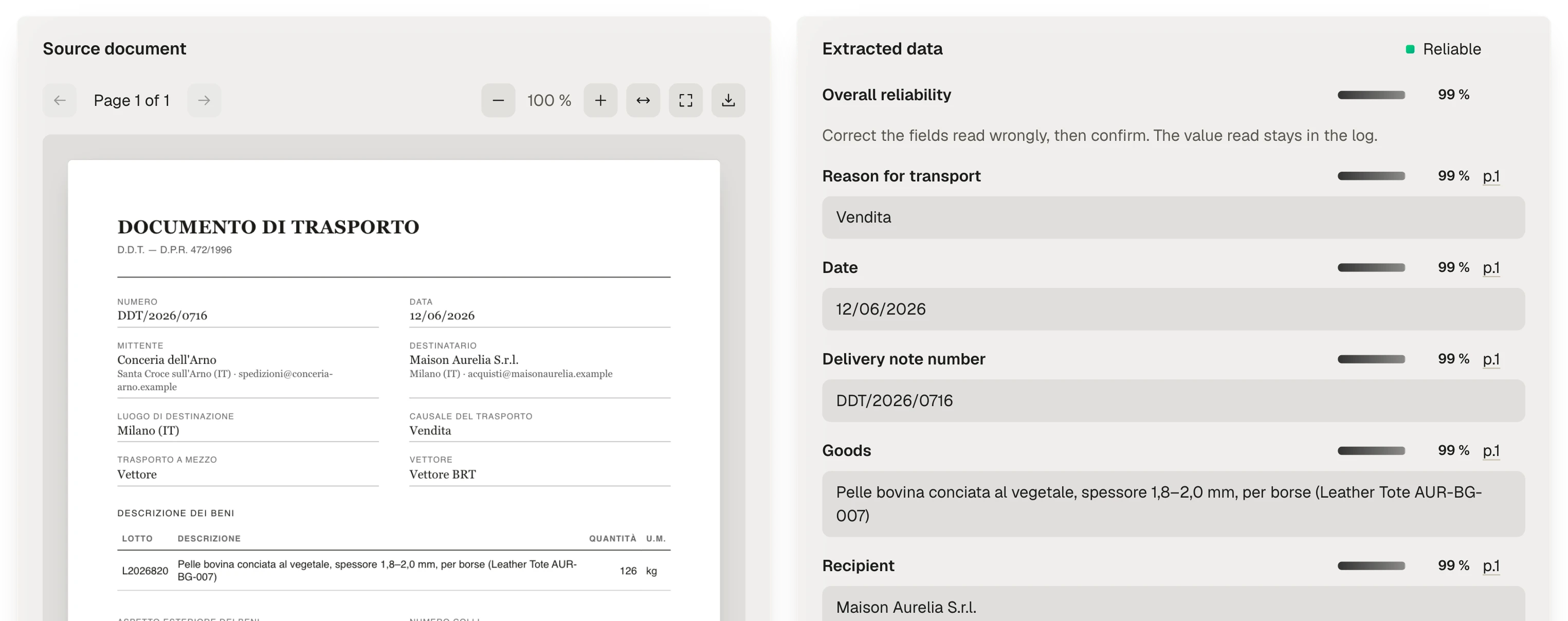
The engine also reads a photograph of a document taken on a phone
PDF, XLSX, images and CSV. No common format has to be agreed in advance: technical documentation is accepted in whatever form it arrives, and brought into a standard form as it comes in.
The engine states how sure it is
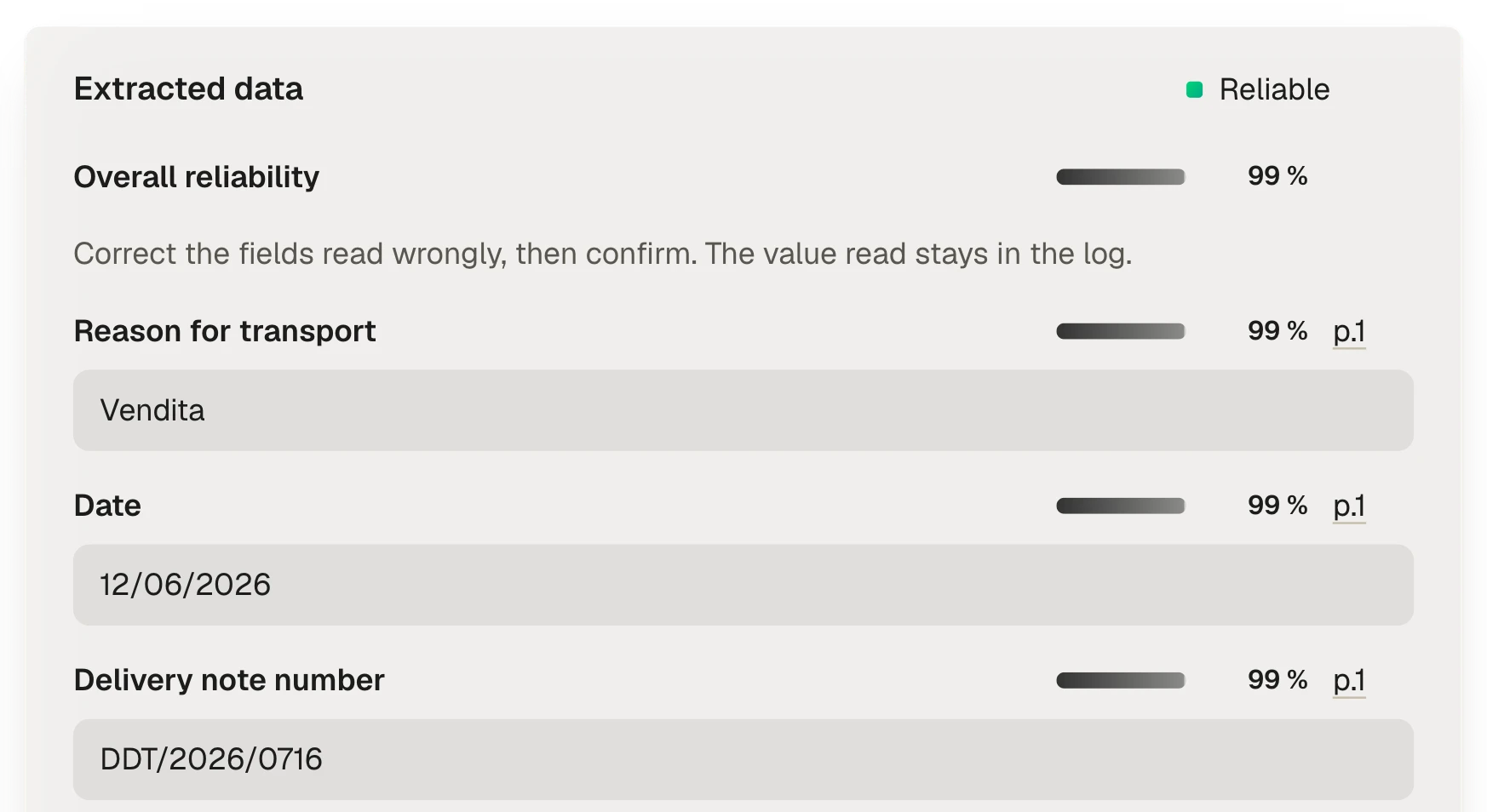
Every reading carries a confidence grade: when it is low, the document is flagged for review.
No datum enters the passport on its own
Every value carries its origin with it: which document it came from, when it was captured, whether it was verified. And it carries that for good.
Which documents, and what comes out of them.
Documents arrive from suppliers through their requests, or you upload them yourself.
Who shipped what, and when
From a delivery note the engine reads the reason for transport, the date and the document number, each with the page it was read on.
Scheme, holder, validity
A GOTS, GRS or OEKO-TEX certificate is read for its scheme, its holder and its dates, so its expiry can be followed without anyone keeping a calendar.
Several documents in one file
One file can hold more than one document: a certificate stapled to a packing list, a delivery note with its invoice. The engine tells them apart and reads the one that serves as evidence.
Once confirmed, every value keeps its document, its page and the person who confirmed it. The value first read stays on record beside any correction. Audit trail and timestamp →
What the engine reads from a document follows the same access rules as supplier collection: each party sees only what it needs.
Who sees what →Questions about document reading
Which documents can it read?
Delivery notes, invoices, bills of materials, technical sheets, certificates, test reports, declarations of conformity and footprint studies such as life-cycle assessments (LCA) or environmental product declarations (EPD).
What happens when the engine is not sure?
A value it cannot find printed on the page goes to a person instead of being accepted. A document read with low confidence, or an illegible file, is flagged for review, not guessed.
Can a supplier keep a document from the brand?
Yes. A supplier can file a document with Tramaproof without the brand opening it. Tramaproof checks what can be checked and, on request, hands the document over whole to a control authority or to the body that issued it.
Where are documents stored and read?
In the European Union: documents are stored in Milan, and the AI models that read them run in European data centres.
Does the supplier have to retype anything?
No. The supplier uploads the file, or a photo taken on a phone, and confirms or corrects what the engine read.